10 things to know about Forrest Yoga
No, it has nothing to do with trees. (Mostly.)
You may have noticed "Forrest Yoga trained" in my bio and wondered: Is this yoga in the woods? Do I need hiking boots? Will there be tree hugging?
Fair questions. The short answer: Forrest Yoga is a strong, intelligently sequenced style of yoga that weaves together breath, core strength, deep body awareness, and emotional honesty. Here are ten things worth knowing, plus what it gave me.
1 Forrest is a person, not a place.
Forrest Yoga is named after its creator, Ana Forrest, who began developing the practice in the early 1980s. No forest required, though reconnecting with nature, including your own, is part of its philosophy.
2 It's rooted in yoga, and entirely its own.
Forrest Yoga grows out of hatha yoga, then adds original poses, deep abdominal work, and sequencing Ana refined over decades of teaching. Expect long holds, strong core work, and heat. It isn't a fast flow, and it isn't a passive stretch.
3 Your breath is not background music.
Breath sits at the center of the practice. You're encouraged to breathe fully and consciously, especially when things get challenging. Instead of bracing, holding your breath, or checking out, you practice staying present.
For anyone who spends the workday staring at a screen and quietly holding their breath, this can be revelatory. I know. I've been that person.
4 Your core is more than your abs.
Forrest Yoga puts unusual emphasis on deep abdominal strength and awareness. But there's more here than a strong midsection. Your core is also where you can feel stability, confidence, and personal power. The invitation is to reconnect with your center, physically and otherwise, and maybe discover you're more capable than you thought.
5 It's called Fierce Medicine for a reason.
Ana Forrest titled her book Fierce Medicine: Breakthrough Practices to Heal the Body and Ignite the Spirit. The philosophy isn't about keeping everything comfortable. It's about building the courage to meet what's difficult, work intelligently with your limits, and find what's possible beyond them. Sometimes the medicine is gentle. Sometimes it's fierce. The point isn't punishment; it's change.
6 It stands on four pillars.
- Breath
- Using breath to steady and support you.
- Strength
- Building physical and emotional resilience.
- Integrity
- Working honestly with your body, limits included.
- Spirit
- Reconnecting with what makes you feel alive and like yourself.
None of them stay on the mat for long.
7 You don't have to be flexible. Or particularly strong.
Seriously. The practice can be demanding, but it's built around adapting poses to individual bodies. You aren't forcing yourself into someone else's idea of a perfect shape. You're learning to pay attention, make intelligent choices, and work with the body you live in. That skill travels well.
8 It teaches you to feel, not just stretch.
Many of us are extraordinarily good at thinking. Feeling what's happening in our bodies? Less so. Forrest Yoga invites you to notice sensation, emotion, habitual tension, and the places you're unconsciously gripping. Not every sensation needs a dramatic breakthrough. Sometimes noticing that your shoulders have been living near your ears all afternoon is plenty. Awareness creates options.
9 It frees up energy.
Think about how much energy goes into bracing, mental noise, old tension, and resisting what's uncomfortable. What becomes possible when some of that energy is yours again? More clarity. More creativity. More ease. Maybe a little more joy. Forrest Yoga is a way to practice unclenching, one breath and one conscious choice at a time.
10 The practice begins when you leave the mat.
You can become impressively strong and flexible without changing your relationship with yourself at all. Forrest Yoga asks for more:
- Can you notice when you're holding your breath in a difficult conversation?
- Can you catch yourself gripping when you don't need to?
- Can you stay connected to yourself under pressure?
- Can you respond rather than react?
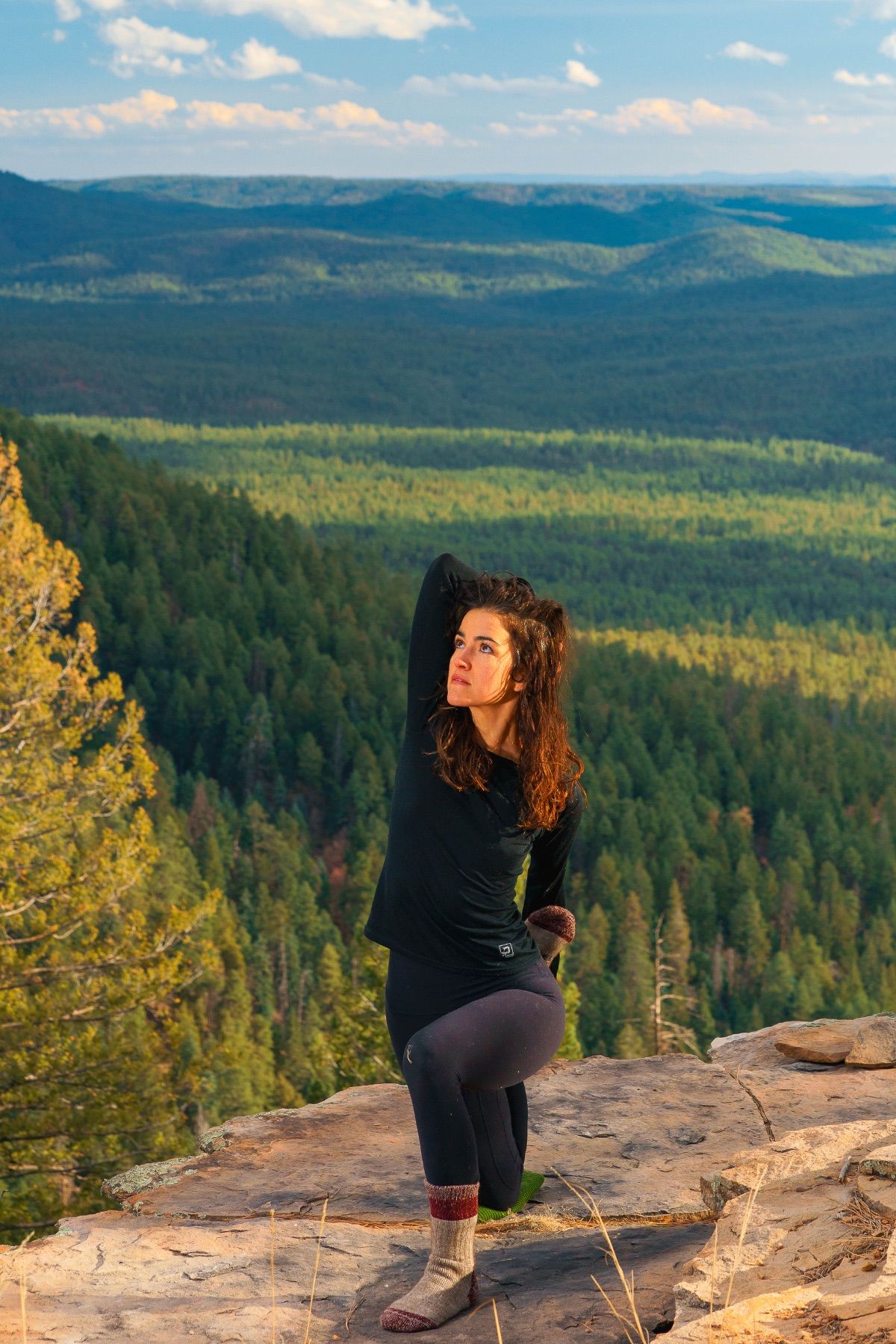
What does this have to do with House of Embodiment?
I've taught yoga and meditation since 2014, and Forrest Yoga is a core influence on how I teach.
Forrest Yoga and Jambo Dragon taught me two small moves I still reach for when stress or overwhelm builds: flex and reach through my toes, and tuck my tailbone. It sounds simple. It is. Those two cues wake up my body, settle my breath and give my brain, heart and nervous system fresh options, so I can respond instead of react.
At House of Embodiment, I bring Forrest Yoga principles into accessible experiences for teams, using movement, breath, meditation, reflection, and connection.
You don't need to be a yogi. You don't need to be flexible. You certainly don't need to be good at sitting still. A little curiosity is plenty.
Clear the static. Restore capacity. Perform with ease.
Learn more about the method at forrest.yoga.